
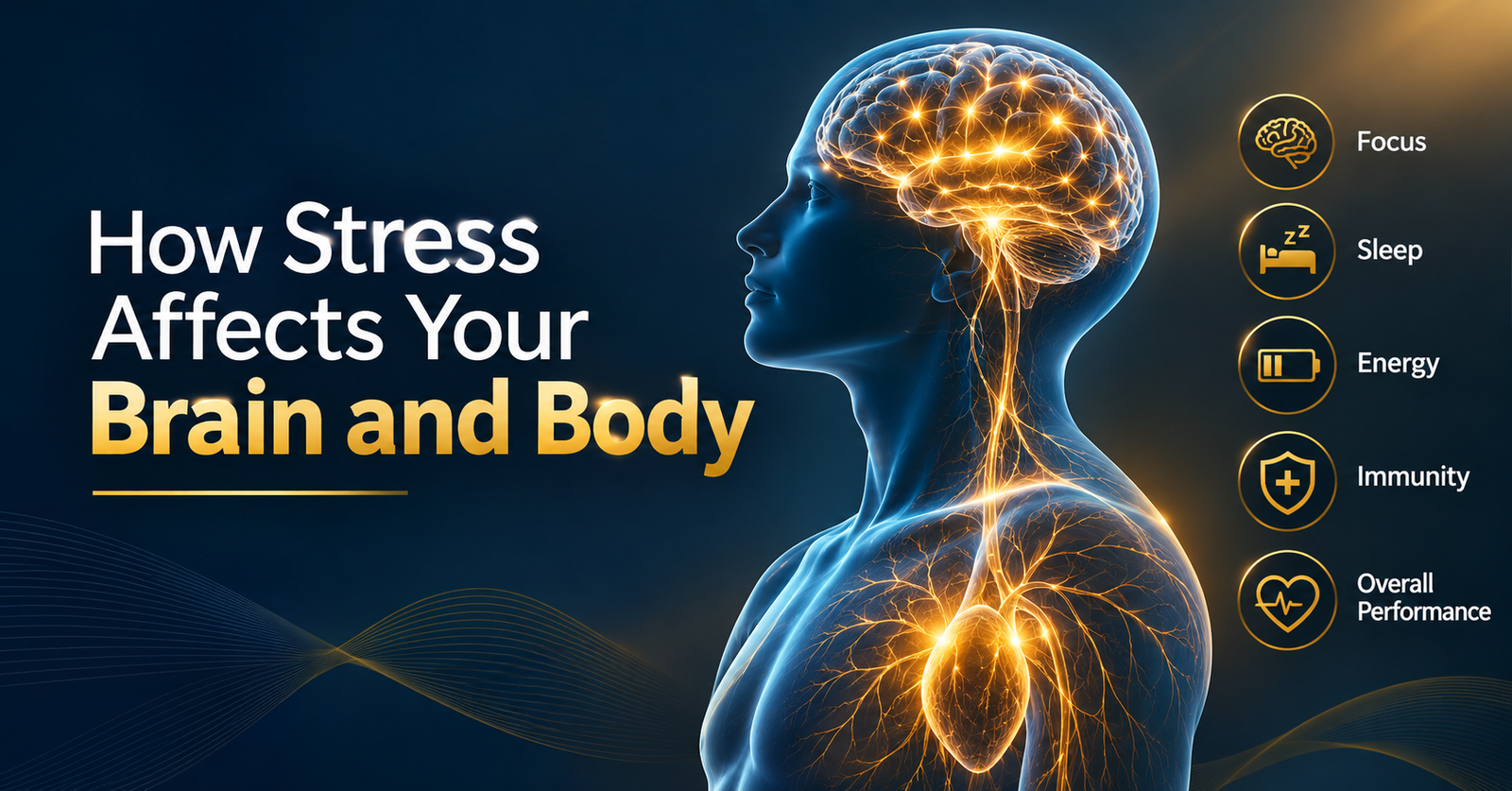
Stress is a natural response to challenges. Whether it comes from workplace pressure, personal responsibilities, financial concerns or unexpected situations, everyone experiences stress at some point.
However, when stress becomes constant, it can affect much more than your mood. It influences how your brain processes information, how your body responds to challenges, how well you sleep and how effectively you perform throughout the day.
Understanding the connection between stress, the brain and the body is the first step towards building better resilience.
What Happens in Your Brain When You Experience Stress?
When you encounter a stressful situation, your brain activates its stress-response system. It prepares your body to respond to a perceived threat through the familiar fight-or-flight response.
Two important brain structures are involved:
1. Amygdala – The Threat Detector
The amygdala helps identify potential threats and triggers emotional responses. During stressful situations, it becomes more active, making you more alert and sensitive to potential danger.
2. Prefrontal Cortex – The Decision-Making Centre
The prefrontal cortex supports planning, concentration, decision-making and emotional regulation. High levels of stress can interfere with these functions, making it harder to think clearly and make balanced decisions.
This explains why people sometimes struggle to concentrate, remember information or respond calmly when under pressure.
How Stress Affects Your Body
Stress is not just a mental experience. It creates physical changes throughout the body.
1. Increased Heart Rate
When stress activates your body’s response system, your heart rate and blood pressure can increase to prepare you for action.
2. Muscle Tension
Prolonged stress can contribute to tightness in the neck, shoulders and back. Some people also experience headaches and general physical discomfort.
3. Sleep Disturbances
Stress can make it difficult to relax, fall asleep or maintain good-quality sleep. Poor sleep can then increase stress levels, creating a difficult cycle.
4. Digestive Changes
The stress response can influence digestive activity, sometimes contributing to stomach discomfort and changes in appetite.
5. Reduced Energy
Constant stress can leave you feeling mentally and physically exhausted, affecting your motivation and everyday activities.
The Impact of Chronic Stress on Workplace Performance
In professional environments, ongoing stress can affect both individual performance and team effectiveness.
Employees experiencing prolonged stress may find it difficult to:
- Maintain focus during important tasks.
- Make clear and effective decisions.
- Manage emotions during challenging situations.
- Communicate effectively with colleagues.
- Maintain consistent productivity.
For managers and business leaders, understanding these effects is important. Employee performance is not determined by skills and knowledge alone. Wellbeing, mental clarity and the ability to manage pressure also matter.
Practical Ways to Manage Stress
Although stress cannot always be avoided, developing healthy habits can help you respond to it more effectively.
1. Practise Controlled Breathing
Slow, comfortable breathing can help calm the body’s stress response. Take a few moments during the day to focus on your breathing.
2. Maintain Regular Physical Activity
Walking, stretching and other suitable forms of exercise can support physical and mental wellbeing.
3. Prioritise Quality Sleep
Maintain a consistent sleep schedule and create a relaxing bedtime routine.
4. Take Short Mental Breaks
Continuous work without breaks can increase mental fatigue. Short breaks can help restore attention and concentration.
5. Develop Emotional Awareness
Recognising your stress triggers and understanding your emotional responses can help you make more thoughtful decisions.
Building Resilience Through the Brain-Body Connection
Managing stress is not simply about avoiding difficult situations. It is about understanding how your brain and body respond to pressure and developing healthier ways to adapt.
This is where Neuro-Physio Resilience (NPR) becomes relevant.
The NPR approach explores the relationship between the nervous system, physical wellbeing and mental performance. It encourages individuals to understand their stress responses and develop practical strategies to support resilience, focus and overall performance.
For professionals, entrepreneurs and business leaders, this understanding can contribute to healthier and more sustainable performance.
Final Thoughts
Stress affects both the brain and the body. When it becomes prolonged, it can influence concentration, decision-making, sleep, physical comfort and workplace performance.
Learning to recognise stress responses and adopting healthier habits can help you build greater awareness and resilience.
A healthier brain-body connection can be an important foundation for better performance.
Discover how Neuro-Physio Resilience can help you understand the connection between stress, the brain and the body.